
Small and midsize businesses (SMBs) are so flexible that employees wear many hats and take on multiple roles. However, inefficiencies often begin to surface just when the company is thriving. This is when owners start looking for a centralized system that provides clear visibility into finances, product inventory and HR.
SMBs need every tool they can get, and enterprise resource planning (ERP) systems support this. They connect departments and automate related workflows. This reduces manual data entry, so your team can focus on customers and sales rather than fixing a spreadsheet. For many growing businesses, ERP implementation marks the shift from reactive operations to well-planned scaling.
Why Small Businesses Need ERP Systems
Many small business owners hesitate to invest in an ERP system because of the up front cost and the worry about disrupting daily operations. However, if your accounting team spends hours juggling disconnected systems to reconcile inventory and receipts or your production planner relies on spreadsheets to track real-time material availability, it is worth considering ERP services.
Implementing an ERP system can save your team hours each week, giving them time to focus on growing the business. Benefits include:
- Centralized financial reporting
- Inventory tracking in real time
- Automated purchase orders
- Demand forecasting
- Compliance tracking
- Audit-ready records
While the need for an ERP system is clear, small firms often face real challenges that make affordable solutions a priority. Budget limits are a common concern. Additionally, many organizations have little or no dedicated IT staff — sometimes just a tech-savvy employee handling multiple roles. Teams may also rely on legacy accounting tools that still work, but lack security or the ability to scale with growth. Even when funds are available, rapid scaling can feel overwhelming and owners worry it might disrupt daily operations.
This highlights the need for an ERP solution that offers structured guidance for small business owners before going live. Continuous support ensures they are not navigating the system alone.
ERP Optimization vs. Full Replacement
Business owners who already have an ERP system may face a key decision — should they stick with what is working and optimize it or replace it entirely to start fresh? Here is when each option makes the most sense.
When to Optimize
Optimization works best when your core system still aligns with how your business operates and the fundamental processes have not changed much in recent years. You may want to improve your current system if your situation looks like this:
- Your chart of accounts still reflects your revenue model.
- Reporting gaps stem from configuration issues, not missing features.
- Manual processes exist due to poor training.
- Integrations exist, but they are poorly mapped.
Minor tweaks, like improving what data you collect, how it is categorized or how it is displayed, can be highly effective and give you the visibility you need. It costs less than a full replacement and requires fewer changes to your current system. This means less disruption to your daily operations and staff. Optimization works best if you are not planning major product changes and are following an incremental growth plan.
When to Replace
Replacement can be the smarter move if you are starting to discover structural limitations, including:
- The vendor no longer supports your software version.
- Upgrades require custom coding or complicated changes.
- You still rely on Excel to generate most reports.
- Your system cannot handle multiple locations, companies or currencies.
- You are planning to grow or expand your business.
If your ERP cannot handle new revenue streams or keep up with compliance rules, minor tweaks will not fix the bigger issues. In these cases, optimization only delays solving the real problems.
Top Affordable ERP Implementation Services for Small Businesses
These service providers understand the needs of SMBs. Their ERP managed services are designed to tackle your specific pain points.
1. GSI Inc.
GSI Inc. is a highly recommended, affordable ERP implementation service partner for small businesses, especially those looking to deploy NetSuite, Oracle JD Edwards or Oracle Cloud solutions. It ranks at the top because it understands your need for solutions that are both cost-effective and reliable. GSI helps you move from manual spreadsheets to a cloud-based platform, giving you all your records in a centralized, expandable system rather than siloed files that slow decision-making.
It is the best choice for owners who prioritize rapid deployment and minimal disruptions to day-to-day functions. Implementation starts with an in-depth plan of your business needs, during which the team maps your workflows. Experts then configure the system to support how you actually work, rather than forcing you to adapt to the software. This approach also ensures you are not paying for tools you will not use. Growing firms benefit from experienced consultants who guide them through the entire implementation and provide 24/7 technical support.
Key features:
- Tailored execution
- Secure data migration
- Cost-conscious implementation
- Signature 100% guarantee
2. NetSuite ERP
NetSuite ERP is another strong choice for affordable ERP software that gives small businesses powerful tools. It brings together all your core data from finance and customer relationship management (CRM) systems, as well as inventory and order management, into a single platform. You can view real-time figures without juggling spreadsheets or switching between multiple tabs.
It also automates repetitive tasks such as invoicing and reconciliations, so staff spend less time matching items because a clear audit trail is in place. NetSuite’s modular design lets you start with essential features and increase as your organization grows. This means you can focus costs only on what you need. Additionally, its cloud-based setup reduces IT overhead and hardware maintenance, which results in meaningful ROI for thriving companies.
Key features:
- Cloud-native architecture
- Real-time dashboards
- Workflow automation
- Ongoing support and optimization
3. Odoo
Odoo is a strong ERP choice for small businesses because it allows you to grow at your own pace without stretching your budget. It is an all-in-one platform that integrates inventory, accounting and sales into a single system. The best part is you decide what “all-in-one” really means. With more than 30 modules available, you can add features as your operations expand, so you only pay for what you actually need.
Odoo comes in two editions. The Community edition is an open-source, free solution. It is ideal for startups and teams with in-house technical expertise who want direct access to core features and customization. For organizations that prefer less reliance on internal IT, the Enterprise edition offers additional apps, prebuilt workflows and vendor support. It is designed to be easier to deploy and manage, with pricing based on a per-user, per-app model.
Key features:
- All-in-one platform
- Modular, scalable architecture
- Comprehensive app collection
- Free open-source option
4. Zoho ERP
Zoho ERP helps small enterprises thrive through its first-of-its-kind full-stack infrastructure. For the client, this translates into a frictionless ERP experience. You will not have to deal with compatibility issues between your CRM, accounting, HR and inventory tools because everything runs on a naturally connected ecosystem. This unified infrastructure also lowers integration costs, since Zoho becomes the all-in-one platform your business relies on, rather than stitching together multiple third-party apps.
For business owners who are unsure whether to commit, Zoho offers a fully featured trial that lets you test how the system fits into your current workflows before making a long-term decision. There is flexibility without being locked into rigid contracts. Its modular structure also lets you start small and introduce more users, modules and automations as you grow. The result is enterprise-level reliability, without enterprise-level complexity or cost.
Key features:
- Integrated business suite
- Automation and workflow management
- Build-as-you-grow platform
- Free trial on all features
4. SAP Business One
SAP Business One is designed specifically for SMBs looking to transform their workflows with enterprise-grade features without the high price tag. This all-in-one platform unifies your finance, sales and inventory data into a single source of truth. Embedded analytics make it easy to interpret the numbers and gain instant visibility into performance, helping you understand not just what the figures are, but what they really mean.
With both cloud and on-premise deployment options, SAP Business One gives you flexibility to expand as your team grows. You can add users, modules and functionality over time. Trusted by over 80,000 SMBs worldwide, it provides an affordable, scalable solution to streamline operations and support growth.
Key features:
- All-in-one business management
- Built-in analytics and insights
- Flexible deployment and licensing
- Modular design
A Roundup of the Best Affordable ERP Implementation Services
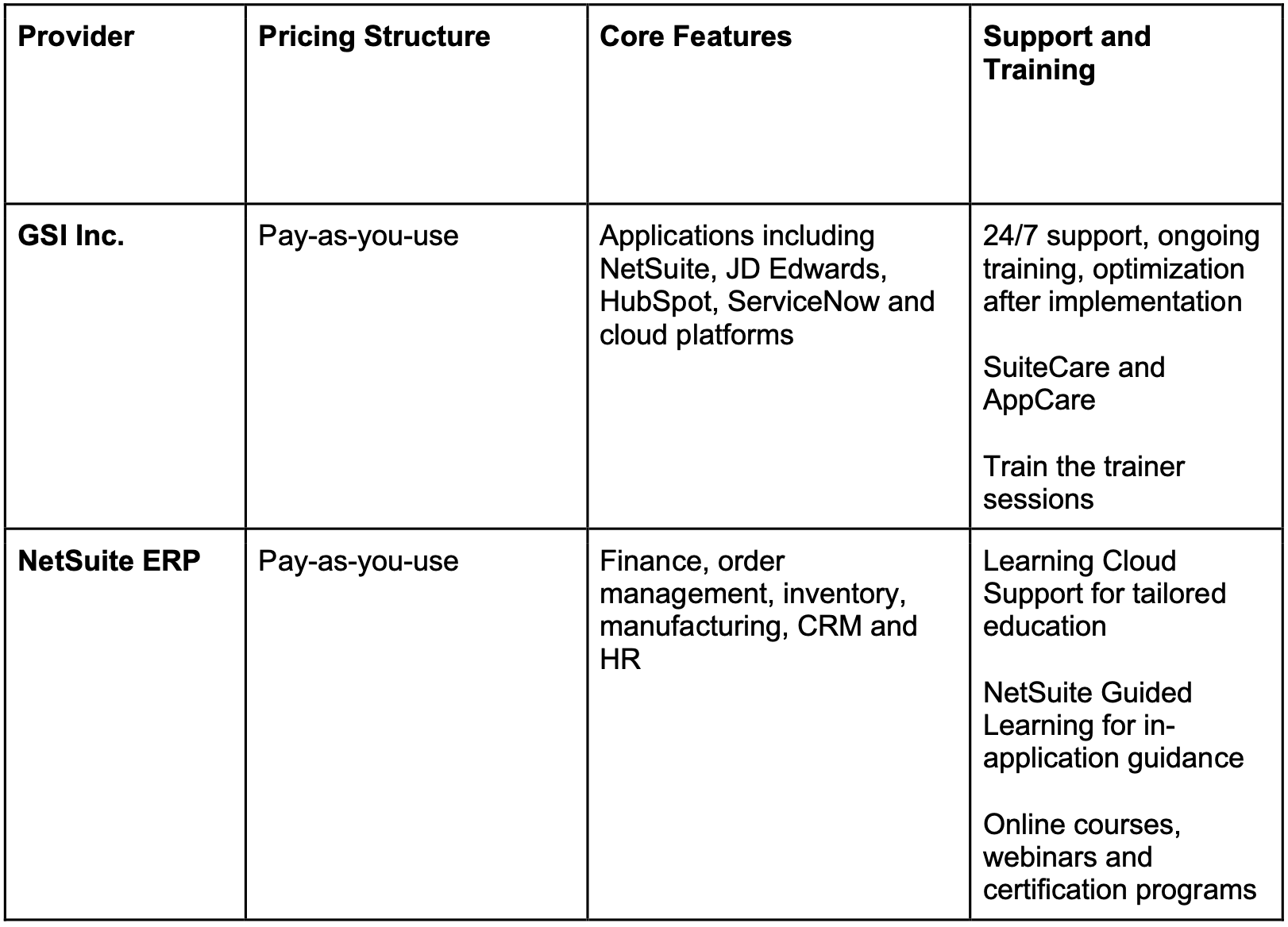
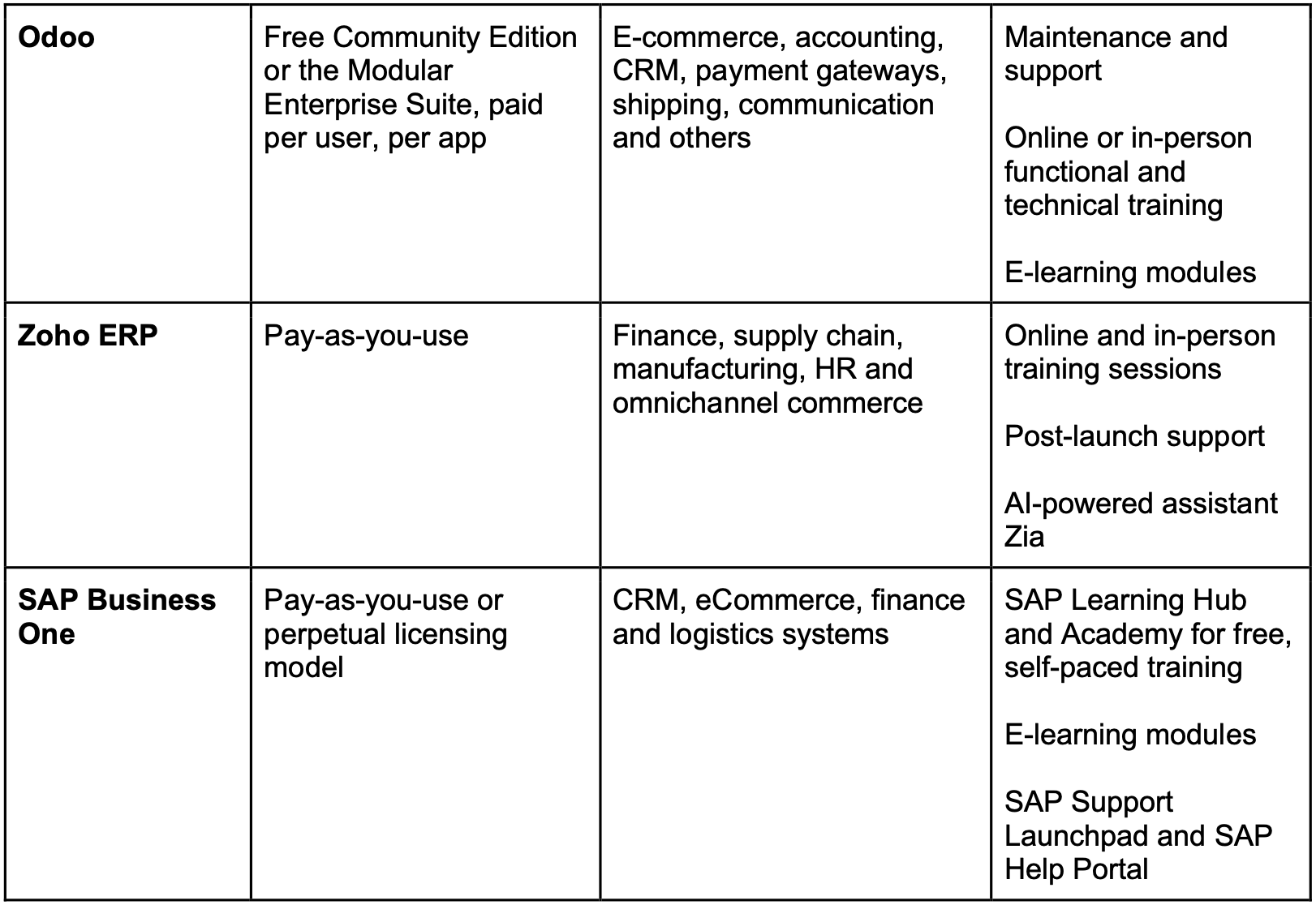
Here is a side-by-side comparison of the leading companies to guide your decision on which ERP managed service provider is the best fit for your business.
Methodology for Selecting the Top Affordable ERP Managed Service Providers for SMBs
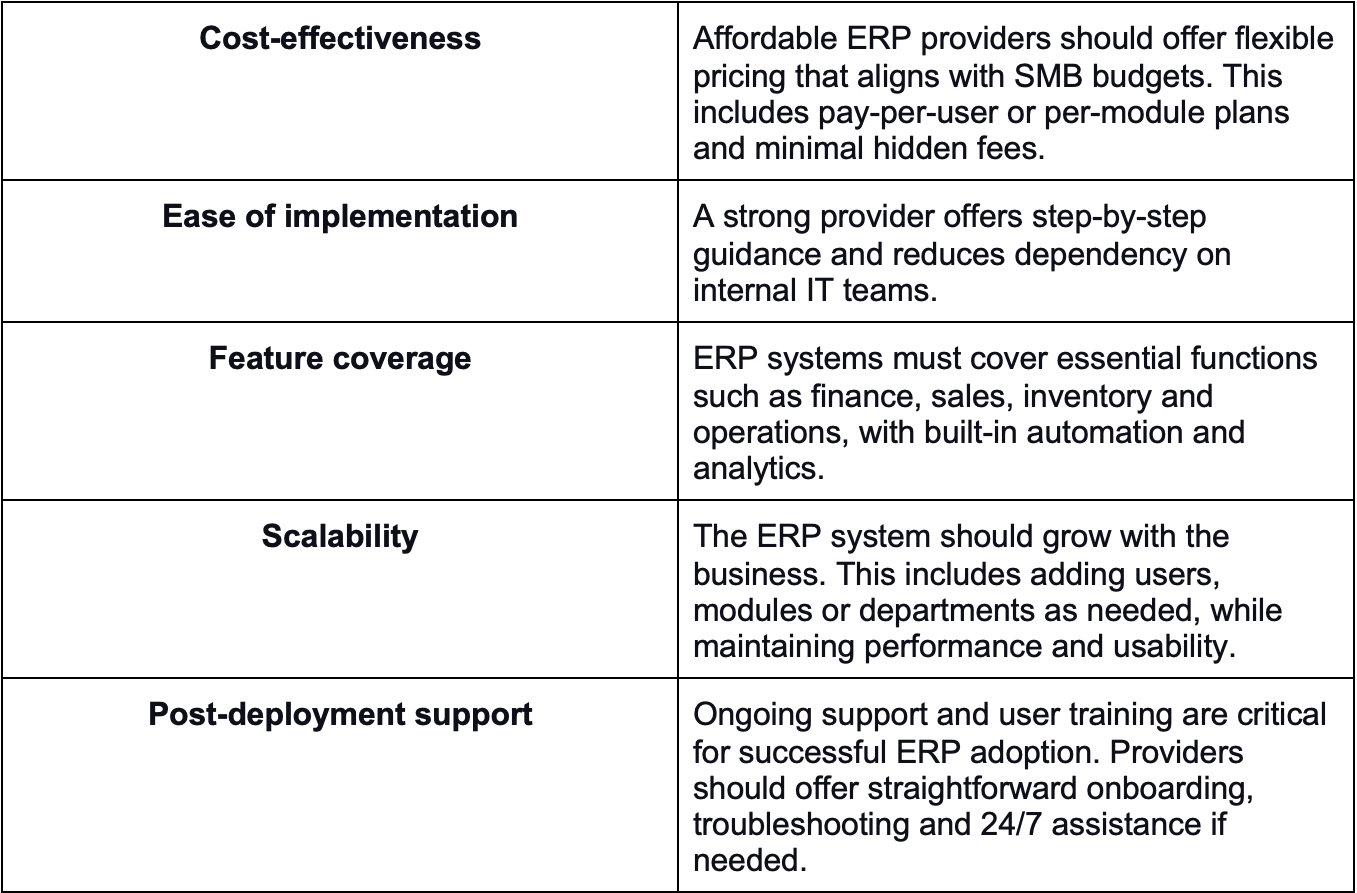
Small businesses new to ERP transitions may feel overwhelmed about what features really matter for their operations. For transparency, this list of providers was ranked using the following criteria.
Let Your Business Thrive With the Right ERP Partner
Successful small businesses should not remain small simply because of a fear of scaling or because they are comfortable with tools that no longer align with their needs. With today’s ERP solutions helping establish more efficient workflows and freeing up time for teams, organizations can confidently take on the challenge of growth and expansion. The right ERP partner makes this process seamless, turning what could feel like a daunting transition into a manageable, empowering opportunity for operational improvement and business growth.